
.webp)
Why Spring Maintenance Is the Most Important Investment a Homeowner Makes All Year
There is a particular kind of problem that develops slowly, invisibly, and without any obvious warning until the moment it becomes expensive. It is the kind of problem that a thorough spring walkthrough catches at the stage where it costs a fraction of what it will cost six months later. A small roof flashing separation that admits a thin film of water during spring rains becomes a rotted rafter and a stained ceiling by fall. A gutter pulling away from its fascia attachment by a quarter inch in April is a foundation drainage problem by July when Wichita's summer storm season delivers the rainfall volumes that expose every drainage weakness in a property. A hairline crack in the caulk around a window frame that goes unaddressed through spring is a drafted, moisture-infiltrated wall assembly by the time the first cold front of October arrives.
Spring maintenance is the discipline that interrupts those progressions before they reach the stage where the repair cost is measured in thousands rather than hundreds of dollars. It is also the discipline that most homeowners understand in principle but execute inconsistently in practice, either because the list feels overwhelming, because the winter has generated enough deferred tasks that the starting point is unclear, or because the motivation that arrives with warm weather competes with the outdoor activities and social commitments that spring in Wichita brings with it.
This checklist is designed to give Wichita metro homeowners a systematic, prioritized approach to spring maintenance that reflects the specific conditions, housing stock, and seasonal patterns of this region rather than the generic advice that applies equally to homes in Phoenix, Portland, and Pittsburgh. The climate that Middle Kansas delivers is specific in the demands it places on residential structures, and the maintenance approach that serves Wichita homeowners best is one that accounts for those specific demands rather than treating every home in every climate as interchangeable.
The Wichita metro spans a wide range of housing ages and construction types. Homes in established neighborhoods like Riverside, College Hill, Crestview, and Eastborough carry maintenance profiles that reflect decades of seasonal stress and the construction practices of their era. Newer construction in Andover, Derby, Maize, and Goddard presents different maintenance priorities but faces the same Kansas climate that makes consistent seasonal maintenance essential regardless of a home's age or construction quality.
Start at the Top: Roof and Attic Inspection
.webp)
The roof is the most consequential structural element of any home when it comes to seasonal maintenance, and it is the element that a Kansas winter tests most directly. Wichita's freeze-thaw cycling, the wind events that move through the region regularly, and the hail that accompanies many of the region's spring and summer storm systems all concentrate their impact on roofing materials in ways that accumulate over time and eventually produce failures that affect everything below.
A spring roof inspection does not require climbing onto the roof surface to be useful. A careful ground-level observation with binoculars captures the majority of conditions that warrant attention, including missing or lifted shingles, granule loss that creates bare patches visible as color changes in the shingle field, flashing that has lifted or separated at chimney bases, pipe penetrations, and valley intersections, and any sagging or deflection in the roof plane that suggests structural stress below the surface.
Shingle condition assessment should focus on the areas of the roof that face west and south, which receive the most direct weather exposure in the Wichita area and typically show the earliest signs of age-related deterioration. Wind damage from the storms that move through Kansas through spring and summer often lifts shingles at their edges and tabs, breaking the sealant bond that holds them in alignment. A lifted shingle that is identified and resealed in spring is a simple repair. The same shingle that has been cycling through lift and reseal positions through an entire season of storms, admitting water at its edges with each event, is a damaged shingle that needs replacement and may have introduced moisture to the decking below it.
Attic inspection in spring complements the exterior roof assessment by revealing what winter conditions have done to the underside of the roof assembly. Signs of moisture intrusion, including water staining on rafters or sheathing, frost patterns that have melted and left mineral deposits, or active mold growth at areas of chronic moisture concentration, indicate that the roof above has been admitting water or that attic ventilation has been inadequate to manage the condensation that temperature differentials between the interior and exterior create through winter. Both conditions need to be addressed before another season of weather exposure compounds the damage.
Gutters, Downspouts, and Drainage: The System That Protects Everything Below
Residential gutters and downspouts are among the most consistently underprioritized maintenance items in the Wichita area, and the consequences of that neglect are among the most broadly damaging that a homeowner can experience. A gutter system that is functioning correctly collects roof runoff and channels it away from the foundation, the siding, and the landscaping below the roof edge. A gutter system that is blocked, damaged, or pulling away from its attachment points does the opposite, concentrating water at exactly the points where the home is most vulnerable to moisture intrusion and foundation stress.
Spring cleaning of gutters and downspouts should follow the pattern of winter debris accumulation in this region. Wichita's deciduous tree canopy drops leaves through fall that accumulate in gutters through the winter months, compacting under snow and ice weight into a dense mat that blocks water flow even when it appears that the gutter opening at the top is clear. Cleaning gutters in spring means removing that compacted debris from the full length of each run, flushing the system with a garden hose to confirm that water flows freely to each downspout outlet, and verifying that downspout extensions direct water at least four to six feet away from the foundation perimeter.
Gutter attachment condition deserves direct inspection in spring because ice weight from Kansas winter events is among the most damaging forces that gutter fasteners face. A gutter that has held ice through multiple freeze-thaw cycles can pull its spike or screw fasteners partially out of the fascia, leaving the gutter hanging at an incorrect pitch that pools water rather than channeling it, or at a separation from the fascia that allows water to run behind the gutter and against the fascia and soffit instead of into the gutter channel. Resetting gutter pitch and refastening loose sections in spring is a straightforward repair that restores the system's function and prevents the fascia rot and soffit deterioration that misaligned gutters produce.
Exterior Envelope: Caulking, Sealants, and Paint Condition
.webp)
The exterior envelope of a Wichita area home is the barrier that keeps the inside conditions separate from the outside conditions, and the quality of that barrier is determined in large part by the condition of the caulking and sealants at every joint, transition, and penetration in the exterior surface. These are not glamorous maintenance items, but they are among the most consequential ones on any spring checklist.
Caulk and sealant at window and door perimeters, at the joint between different exterior cladding materials, at penetrations for utilities and mechanical equipment, and at the base of exterior trim elements all share a common vulnerability to the thermal cycling that Wichita's climate delivers. Caulk expands and contracts with temperature changes, and over multiple seasons that movement fatigues the sealant at its adhesion points, producing cracks and separations that allow water and air infiltration. A spring walk of the full exterior perimeter with specific attention to these joints, probing suspicious areas with a finger to test adhesion, identifies the locations where recaulking is needed before those locations admit water through the coming storm season.
Exterior paint condition assessment in spring serves two functions simultaneously. It identifies areas where paint has failed to a degree that requires attention, and it reveals the moisture and structural conditions that paint failure is frequently a symptom of. Peeling paint on wood siding or trim that is peeling from the substrate rather than from a previous paint layer indicates that moisture is moving through the wood from behind, pushing the paint off the surface from the inside. That pattern identifies a moisture intrusion problem that recaulking or repainting alone will not resolve. The source of moisture needs to be identified and corrected before the paint surface is addressed, or the new paint will fail through the same mechanism in a fraction of its expected service life.
HVAC System Readiness Before Cooling Season Begins
The transition from heating to cooling demand that Wichita homes make each spring is one of the most mechanically significant events in a residential HVAC system's annual cycle, and it is one that most homeowners mark by simply switching the thermostat from heat to cool and hoping for the best. That approach works until it does not, and in a Kansas summer where afternoon temperatures regularly push into the mid-90s and heat index values climb well above that, an air conditioning system that fails in July is not an inconvenience. It is a genuine comfort and health concern, particularly for households with young children, elderly occupants, or anyone with respiratory or cardiovascular sensitivities.
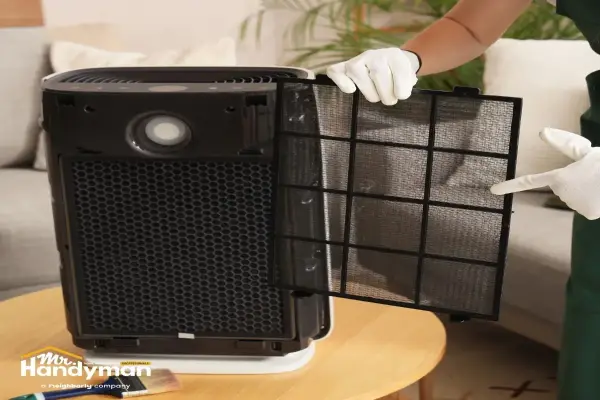
Spring HVAC maintenance starts with filter replacement, which is the single most accessible and most consistently neglected maintenance action available to homeowners. A filter that has been in service through a full heating season carries a load of dust, pet dander, and particulate matter that restricts airflow through the system in ways that reduce both heating and cooling efficiency and place additional mechanical stress on the blower motor. Replacing the filter before the cooling season begins ensures that the system starts summer in the best possible operational condition rather than fighting reduced airflow from the first day of cooling demand.
The outdoor condensing unit deserves direct attention after winter. Wichita's winter wind events carry debris that accumulates within the condenser coil fins, and the freeze-thaw cycling that the unit experiences through the cold months can compress fins that were previously open and flowing freely. Gently rinsing the condenser coil with a garden hose from the inside out removes debris accumulation and restores airflow through the coil in a way that improves system efficiency meaningfully. Bent fins can be carefully straightened with a fin comb tool, restoring the coil geometry that efficient heat exchange requires. Clearing the area around the unit of any vegetation, debris, or stored items that winter may have deposited within the recommended clearance zone around the condenser completes the exterior preparation.
A professional HVAC tune-up in spring, completed before the first cooling demand of the season, catches developing mechanical issues that homeowner-level maintenance cannot identify. Refrigerant charge verification, electrical connection inspection, capacitor condition assessment, and condensate drain clearing are all service items that require equipment and training beyond what a capable homeowner can bring to the task. In the Wichita market, scheduling this service in March or early April, before the spring rush fills technician schedules, typically produces better access and more attentive service than waiting until the first hot week of May when every HVAC company in the metro is operating at capacity.
Foundation, Basement, and Crawl Space Conditions Worth Checking Every Spring
Foundation and below-grade conditions in Wichita area homes are shaped by a combination of soil type, drainage patterns, and the moisture cycling that Kansas winters deliver, and they deserve systematic spring inspection because the problems that develop in these areas are among the most expensive residential repairs when they reach the stage of structural consequence.
The clay-heavy soils that underlie much of the Wichita metro expand when wet and contract when dry in a cycle that exerts lateral pressure on foundation walls during wet periods and then relaxes during dry ones. Repeated through multiple seasons, this cycling works at foundation walls, floor slabs, and the connections between the foundation and the framing above it in ways that produce cracks, settlement, and moisture infiltration pathways that a spring inspection should capture and evaluate honestly.
Walking the perimeter of the foundation at grade level in spring with specific attention to crack patterns, efflorescence on masonry surfaces, and any areas where the soil has settled away from the foundation wall gives a homeowner useful information about what winter has done to the foundation's moisture exposure. Horizontal cracks in basement walls are more concerning structurally than vertical ones, because horizontal cracking can indicate lateral soil pressure that is stressing the wall rather than simple thermal movement. Any crack pattern that has changed measurably since the previous inspection, or that is accompanied by visible moisture infiltration or efflorescence, warrants professional evaluation before the spring rain season loads the surrounding soil with the moisture that makes existing conditions more acute.
Sump pump function is a spring maintenance item that Wichita area homeowners with below-grade spaces should treat as non-negotiable. The spring storm season that follows winter is precisely when a sump pump is most likely to be needed, and a pump that fails during a significant rain event can allow basement flooding that causes extensive damage to finished spaces, stored belongings, and mechanical equipment. Testing the pump by pouring water into the pit until the float triggers the system, confirming that the discharge line is clear and directing water away from the foundation, and checking the backup power situation for homes that use battery or water-powered backup systems takes a few minutes and eliminates the possibility of discovering a failed pump during the weather event that made it necessary.
Window, Door, and Interior Systems Worth Including in Spring Walkthrough
Windows and doors are the penetrations in the building envelope that winter stress affects most directly, and spring inspection of their condition captures both the weatherstripping and sealant failures that affect energy performance and the operational issues that thermal cycling produces in hardware and framing.
Weatherstripping at exterior doors compresses and hardens through repeated temperature cycling, and a door that sealed effectively in fall may be admitting a visible light gap along its perimeter by spring. Running a hand along the perimeter of each closed exterior door to feel for air movement is a simple diagnostic that identifies weatherstripping that needs replacement before another year of energy loss through those gaps accumulates on utility bills. Door hardware that has stiffened, a lockset that requires more force to operate than it did previously, or a door that no longer latches without being lifted or pushed indicates that the door frame has shifted through winter and that adjustment is needed to restore proper function.
Window condition in spring inspection should address both the glass assembly and the frame and operating hardware. Double-pane windows that have developed interior fogging between the glass layers have lost their insulating gas fill through a failed seal, and that failure reduces the thermal performance of the window to near-single-pane levels. Identifying fogged windows in spring creates an opportunity to plan replacement during a season when window lead times and installation scheduling are more manageable than during peak summer demand.
Interior spring maintenance items that complement the exterior-focused checklist include smoke and carbon monoxide detector testing and battery replacement, water heater inspection for sediment accumulation and anode rod condition, and a systematic check of supply lines under sinks and behind appliances for any signs of moisture or incipient failure that winter usage patterns may have accelerated.
Frequently Asked Questions
How long does a thorough spring home maintenance walkthrough typically take?
A systematic walkthrough of a standard Wichita area home covering exterior, mechanical, and interior systems takes two to three hours when done deliberately rather than cursorily. Breaking it into an exterior session and a separate interior session across two weekend mornings makes the process manageable without feeling rushed. The time invested in the inspection is recovered many times over in the repair costs it prevents.
Should I hire a professional home inspector for spring maintenance or handle it myself?
Most spring maintenance inspection items are within the capability of an attentive homeowner who is willing to be systematic and honest about what they observe. The value of a professional inspection is in the trained eye that recognizes developing conditions that a homeowner might not identify as significant. Homes over 30 years old, homes with known water intrusion history, and homes that have not had professional inspection in several years benefit most from professional assessment as a complement to the homeowner's own walkthrough.
What is the most commonly missed item on a spring home maintenance checklist?
Dryer vent cleaning is among the most consistently overlooked maintenance items in residential spring checklists. A dryer vent that has accumulated lint through a winter of heavy use restricts airflow in a way that both reduces dryer efficiency and creates a genuine fire risk. Disconnecting the vent at the dryer and clearing accumulated lint from the full length of the duct run to the exterior termination point is a straightforward task that addresses both concerns.
How do I prioritize spring maintenance items when I cannot address everything at once?
Address items in consequence order. Roof, drainage, and foundation conditions that could admit water or create structural stress if left unaddressed through spring storm season come first. Mechanical system readiness for cooling season comes second. Exterior envelope sealant and caulk conditions come third. Cosmetic and appearance items, while worth addressing, can be sequenced after the items with structural and moisture implications.
Start the Season With a Home That Is Ready for What Kansas Brings
A completed spring maintenance checklist is not just a list of tasks crossed off. It is the assurance that the home heading into summer is in the best possible condition to handle what Wichita's active weather season delivers and to provide the comfort, efficiency, and safety that every household deserves. Mr. Handyman of the Wichita Metro Area works with homeowners throughout the region on the maintenance and repair items that spring inspections identify, from gutter repairs and caulking to HVAC preparation and interior system checks.
Call us or visit mrhandyman.com/wichita-metro-area to schedule spring maintenance service or request help with specific items your walkthrough has identified. Getting the right repairs done now is what makes the rest of the year go the way it should.