
The Season That Sets Up Everything That Follows
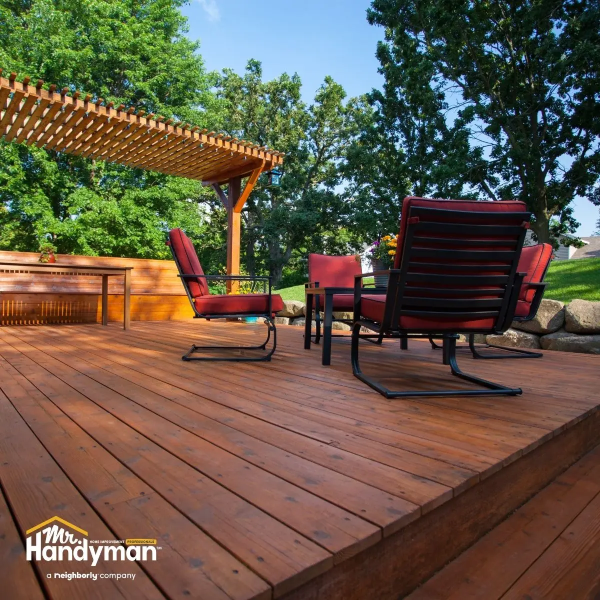
Spring in Wichita arrives with a sense of possibility that is hard to ignore, and for homeowners who have been looking out at a backyard or a bare deck through the window all winter, that feeling is usually attached to a specific project that has been taking shape in their heads since October. An expanded patio. A pergola that creates shade and definition over an outdoor dining area. A deck repair that finally gets done properly instead of being patched another season. A fire pit area that gives the backyard a genuine gathering point.
The instinct to act on those plans in spring is correct, and not just emotionally. There are practical, concrete reasons why spring is the most strategic season to start an outdoor living project in the Wichita metro, reasons that go beyond good weather and the motivation that comes with longer days. Understanding those reasons helps homeowners commit to a timeline with confidence rather than letting another spring pass while the project stays on the list.
Wichita's climate creates a specific outdoor living window that is worth protecting. Summer heat in Kansas arrives decisively and stays. By mid-July, afternoon temperatures regularly push into the mid-90s, and outdoor work in that heat is genuinely punishing for both the people doing it and the materials being installed. Concrete cures differently in extreme heat. Wood expands and can be harder to work with precision. Adhesives and sealants have narrower application windows. Starting an outdoor project in spring, when temperatures are cooperative and conditions are stable, means the work gets done right and the finished space is ready to use at the beginning of summer rather than at the end of it.
What Spring Conditions Make Possible That Other Seasons Do Not
The window between late March and late May in the Wichita area represents a set of conditions that genuinely favor outdoor construction and installation work. Soil temperatures have risen enough to work with comfortably, frost is no longer a concern for freshly poured concrete or newly installed posts, and the ground has firmed up after winter saturation to a point where excavation and grading work can be done accurately.
This matters more than it might seem. Outdoor living projects that involve any kind of ground-level work, patio installation, pergola or gazebo post setting, retaining wall construction, or grade correction around a deck foundation, all depend on stable soil conditions that winter and early spring cannot reliably provide. A patio poured over soil that still has frost beneath the surface, or posts set in ground that has not fully drained from winter saturation, creates a foundation that shifts as conditions change. Spring's stable middle ground between winter freeze and summer bake is the right moment to do that foundational work correctly.
Contractor availability is another spring advantage that Wichita homeowners often underestimate until they try to schedule a project in June and discover that every qualified crew in the metro is booked through August. Spring scheduling, particularly in March and April, gives homeowners access to experienced contractors at their most available point in the annual cycle. That availability often translates to more attentive project management, better material lead times, and a finished project that reflects the kind of careful workmanship that gets rushed when a crew is juggling five jobs simultaneously in peak summer season.
Material availability follows a similar pattern. Lumber, pavers, composite decking, and structural hardware are all more readily available in spring before peak demand drives lead times out and limits selection. Homeowners who begin the material selection process in early spring can often choose from a full range of options rather than accepting what is in stock when a midsummer project finally gets scheduled.
Decks: Repairs, Rebuilds, and Expansions That Should Happen Now
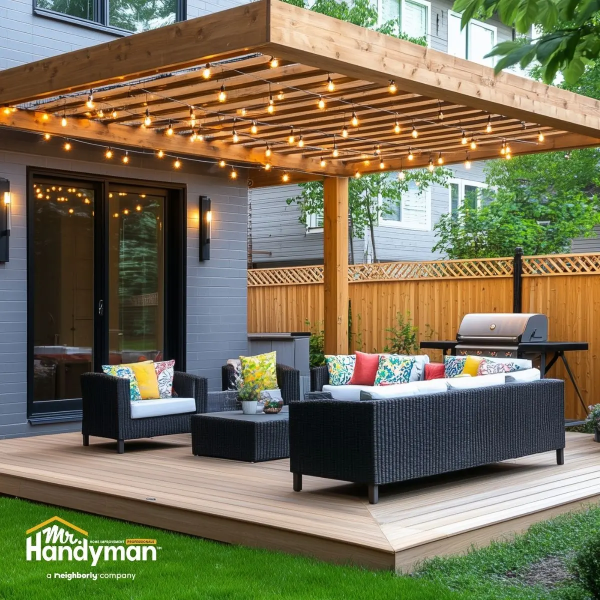
Decks take a significant amount of abuse from a Kansas winter, and that abuse is not always visible from a casual glance across the backyard. The freeze-thaw cycling that Wichita experiences through winter works on deck structures in specific ways that accumulate over seasons and eventually produce failures that range from cosmetic to genuinely structural.
Wood decking expands when it absorbs moisture and contracts as it dries. Repeated through an entire winter, that cycle opens gaps between boards, works fasteners loose, and accelerates checking and splitting in the wood surface. Ledger boards, the structural members that attach the deck to the house, are particularly vulnerable because they sit in a moisture trap between the deck frame and the exterior wall of the home. A ledger board that has been taking on moisture for several winters without adequate flashing or drainage can develop rot that compromises the structural connection between the deck and the house in ways that are not visible until the connection fails.
Spring is the right time to walk your deck with the specific intention of evaluating its condition honestly rather than assuming it is fine because it looks roughly the same as last year. Press the tip of a screwdriver into the ledger board and into any posts that sit close to ground level. Sound wood resists the pressure. Rotted wood accepts the tip with little resistance. Check the joist hangers and post bases for rust that has progressed past surface oxidation into structural degradation. Look at the decking boards for any that have cupped significantly, split through their thickness, or pulled away from the framing below. These are not cosmetic issues that can be managed with a coat of stain. They are structural and safety concerns that need to be addressed before the deck carries the load of a summer full of gatherings.
For homeowners whose decks are in sound structural condition but showing significant surface wear, spring refinishing is a project with a favorable timeline. Deck stain and sealer applied in spring, when temperatures are moderate and humidity is manageable, adheres and cures more consistently than product applied in summer heat or fall cooling. A properly prepared and sealed deck surface going into summer holds up through the season's UV exposure, foot traffic, and moisture events far better than one that was refinished under suboptimal conditions.
Patios: Why Material Choice and Base Preparation Define Long-Term Performance
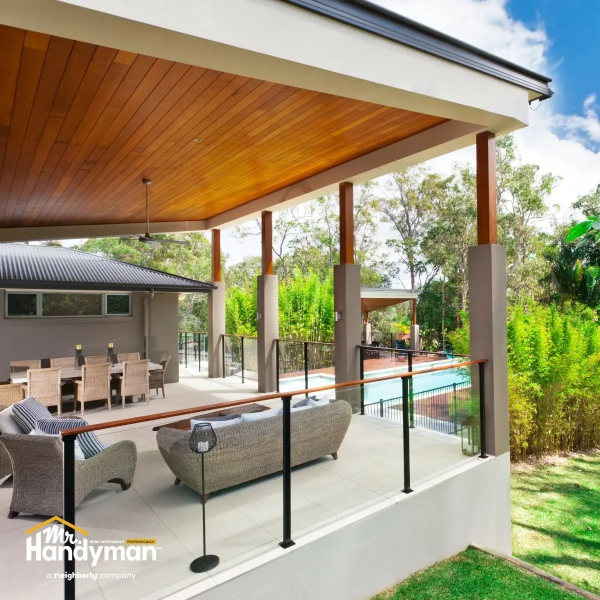
A patio is one of the most used outdoor surfaces a Wichita homeowner can add, and it is also one of the most commonly installed incorrectly, which is why so many area patios develop settling, cracking, and drainage problems within a few years of installation. The visible part of a patio, whether it is poured concrete, pavers, natural stone, or a composite panel system, is only as good as the base preparation beneath it. Spring is the season when that base preparation can be done correctly.
Proper patio base preparation in a Kansas climate requires accounting for the freeze-thaw cycling that the region experiences every winter. A base that is too shallow or that uses the wrong compaction materials will shift with ground movement, and that shifting expresses itself as uneven surfaces, cracked slabs, or pavers that rock and separate at the joints. The standard recommendation for paver and natural stone patios in this climate zone is a compacted gravel base of four to six inches minimum, with a layer of bedding sand above it that allows for minor adjustments during installation. Poured concrete patios require proper sub-base compaction and adequate thickness, along with control joints that give the slab a place to crack along a planned line rather than randomly across the surface.
Drainage is the other variable that separates a patio that performs well over time from one that creates problems. A patio that does not slope away from the house at an adequate grade will pool water against the foundation after rain events, which in Wichita's spring storm season means significant and repeated water exposure at the base of the home's exterior wall. Getting the grade right during installation, before the surface material goes down, is the kind of foundational decision that determines ten years of performance.
Pergolas, Shade Structures, and Outdoor Rooms That Extend Usable Time Outside
One of the most consistent complaints Wichita area homeowners have about their outdoor spaces is that the Kansas summer makes them unusable during the hours when they would most want to be outside. A backyard that feels inviting in May becomes difficult to enjoy between noon and six in the evening by July when direct sun and heat index values make unshaded outdoor space genuinely uncomfortable. Shade structures address that problem directly, and spring is the right time to plan and install them so they are functional before the heat arrives rather than after.
Pergolas are the most popular shade structure choice in the Wichita market for good reason. They provide partial shade, define an outdoor room without enclosing it, and add architectural interest to a backyard that a flat open patio or deck cannot achieve on its own. A pergola positioned over an outdoor dining area or a seating zone creates a sense of destination that changes how the space is used. People gravitate toward defined spaces in a way that they do not gravitate toward open, undefined ones, and a pergola delivers that definition while keeping the outdoor connection that makes the space worth being in.
Material selection for a pergola in this climate deserves careful thought. Cedar and redwood are traditional choices that perform well in Kansas weather, resist decay better than standard dimensional lumber, and take stain and finish products reliably. Pressure-treated lumber is a more affordable option that holds up to ground contact and moisture exposure, though it requires the right finish system to achieve a refined appearance. Composite and aluminum pergola systems have grown significantly in the Wichita market over the past several years because they eliminate the ongoing maintenance that wood structures require. A composite or powder-coated aluminum pergola does not need to be stained or sealed on a seasonal schedule, which is a practical advantage for homeowners who want the benefit of the structure without the recurring maintenance commitment.
Attached shade sails and retractable awning systems are worth considering for homeowners whose deck or patio geometry does not lend itself to a freestanding or attached pergola. These systems provide flexible, adjustable shade coverage and can be installed with far less structural complexity than a full pergola build. In a climate where afternoon storms can arrive quickly, a retractable system also offers the practical advantage of being able to pull the shade coverage in when conditions change.
Outdoor Kitchens and Entertainment Areas That Change How You Use Your Backyard
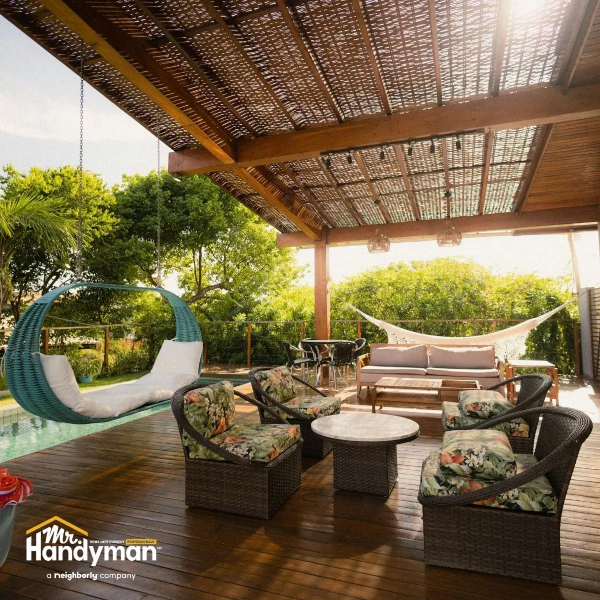
The outdoor kitchen category has expanded considerably in the Wichita area market over the past decade, and the driving force is straightforward. A backyard with a built-in grill station, counter space, and a dedicated prep and serving area functions in a fundamentally different way during a summer gathering than one where the host is making repeated trips between the indoor kitchen and an outdoor grill. Keeping the cooking, the food, and the gathering in the same outdoor space changes the social dynamic of hosting in a way that homeowners who make the investment consistently describe as one of their best home decisions.
An outdoor kitchen does not need to be elaborate to deliver that functional shift. At its most practical, it is a built-in grill set into a masonry or steel frame counter, with enough surface space on either side to stage food and serve without crowding. Adding a small outdoor refrigerator, a side burner, and a sink with a dedicated water line elevates the setup considerably without requiring a full outdoor room construction project. What matters most is that the installation is done correctly from a structural and utility standpoint, with proper footings for masonry structures, appropriate gas line connections handled by a licensed professional, and drainage addressed for any outdoor sink.
Countertop material selection for outdoor kitchen installations in Kansas needs to account for the full range of conditions the surface will experience. Granite and porcelain tile both perform well outdoors in this climate. Concrete countertops are a popular custom option that works well in outdoor applications when properly sealed. Poured concrete surfaces without adequate sealing absorb moisture and stain readily, and in a freeze-thaw climate like Wichita's, unsealed concrete can crack as water trapped in the surface expands during freeze cycles.
Fire Pits and Outdoor Gathering Points That Make the Backyard a Destination
A fire pit does something that most other backyard improvements cannot fully replicate. It creates a reason to be outside after dark and in the shoulder seasons when temperatures drop below comfortable sitting weather. Spring and fall evenings in Wichita are often ideal for outdoor gathering if there is a heat source, and a well-positioned fire pit extends the usable outdoor season on both ends in a way that adds genuine value to daily life.
Built-in fire pit installations are a spring project because the masonry work involved requires stable temperatures and properly prepared ground. A fire pit that is set directly on soil without an adequate base will settle unevenly over time, creating gaps in the masonry that become both a structural and a safety concern. A compacted gravel base with a concrete footing provides the stable foundation that a built-in fire feature needs to perform correctly and safely through years of use and seasonal ground movement.
Gas fire pit inserts have grown in popularity in the Wichita metro because they eliminate the wood sourcing, smoke management, and ember concerns that come with wood-burning installations. A gas insert connected to a natural gas line or a propane supply produces a consistent, controllable flame that can be turned on and off without the preparation and cleanup that a wood fire requires. For homeowners in neighborhoods or HOA communities with restrictions on open burning, a gas fire feature often provides the outdoor fire experience within the boundaries that a wood-burning pit would not.
Frequently Asked Questions
How far in advance should I schedule an outdoor living project in Wichita?
For projects involving contractor installation, scheduling six to eight weeks ahead of your target start date is a reasonable minimum in spring. Pergola builds, patio installations, and outdoor kitchen projects that require masonry or utility work book up quickly as the season progresses. Homeowners who want a project completed by Memorial Day should be having contractor conversations in March.
What permits are typically required for outdoor living projects in the Wichita area?
Decks above a certain height, permanent structures like pergolas attached to the home, gas line extensions, and electrical work for outdoor lighting or outlets all typically require permits through the City of Wichita's building services department. Freestanding fire pits and unattached shade sails generally do not. Confirming permit requirements before work begins prevents complications during the project and at resale.
How do I choose between a wood and composite deck surface?
Wood decking costs less upfront but requires regular maintenance including cleaning, staining, and sealing on a seasonal schedule to maintain its appearance and structural integrity. Composite decking costs more initially but eliminates most of that ongoing maintenance and holds its appearance through Kansas weather cycles more consistently. For homeowners who want a low-maintenance outdoor surface they can enjoy without seasonal upkeep, composite is typically the better long-term value.
Can outdoor living improvements affect my home's appraised value?
Yes, meaningfully in the Wichita market. A well-constructed deck, patio, or outdoor living area adds to the functional square footage of the home in the eyes of buyers and appraisers. The return varies depending on the quality of the installation and how well it aligns with the expectations of comparable properties in the neighborhood, but outdoor living improvements consistently contribute positively to perceived and appraised value in this market.
Make This the Summer Your Backyard Finally Works the Way You Imagined
A well-planned outdoor living space changes how your household uses your property through every warm month of the year. Mr. Handyman of the Wichita Metro Area works with homeowners throughout the region on the outdoor repairs, installations, and improvements that turn underused backyard space into a genuine extension of the home.
Call us or visit mrhandyman.com/wichita-metro-area to schedule service or discuss your outdoor project this spring. Starting now means finishing before summer arrives, and finishing before summer arrives means actually enjoying the results when the season is at its best.
