.webp)
Every remodeling project reaches a point where the decisions shift from planning to selecting — selecting the flooring, the fixtures, the wall materials, the trim, the hardware. These choices feel exciting, and in many ways they are. They're the decisions that shape how a finished space looks and how it functions day to day. But in Charleston and Summerville, material selection carries additional weight that homeowners in other parts of the country don't face in quite the same way. The Lowcountry environment is genuinely demanding, and materials that perform well in drier or more temperate climates can fail here in ways that aren't immediately obvious at the point of purchase.
The combination of high ambient humidity, intense UV exposure, frequent heavy rainfall, salt air in coastal areas, and the temperature cycling between mild winters and intense summers creates a testing environment that separates materials that are appropriate for the region from those that merely appear similar at first glance. Getting these choices right the first time — selecting materials suited to both the specific application and the local climate — produces results that hold up over years. Getting them wrong means replacement cycles that cost more than the original investment and repairs that become recurring rather than resolved.
Understanding what drives good material choices in the Lowcountry context, across the range of applications that remodeling projects involve, gives homeowners a framework for evaluating options that goes beyond color samples and price points.
Why the Lowcountry Climate Changes the Material Equation
Humidity is the governing factor in material selection throughout the Charleston and Summerville area, and its effects are more pervasive than most homeowners initially appreciate. Relative humidity throughout the region averages in the high range for much of the year, and during summer months it routinely sits above the threshold where materials that absorb moisture begin to demonstrate that absorption through expansion, warping, and surface degradation.
Wood is the most familiar example. In moderate climates, wood performs reliably across a wide range of applications — flooring, cabinetry, trim, exterior siding — with standard finishing and maintenance. In the Lowcountry, wood in exterior applications or in high-moisture interior environments behaves differently. It moves more with seasonal humidity changes, requires more frequent maintenance to keep its protective finish intact, and is more vulnerable to the biological growth that the regional climate supports. None of this means wood is the wrong choice everywhere in a Lowcountry home, but it means that wood choices need to account for the specific conditions of each application rather than defaulting to whatever is standard elsewhere.
Salt air introduces an additional variable for homes within a certain proximity to the coast. Metal fasteners, fixtures, and hardware that perform reliably in inland environments corrode faster in salt-laden air, and that corrosion affects both appearance and structural integrity over time. Exterior hardware, roofing fasteners, deck screws, and similar metal components in coastal locations need to be specified at a higher corrosion resistance level than the same applications would require just a few miles inland.
UV exposure in the Lowcountry is intense relative to many other parts of the country, and its effects on exterior materials are significant. Paint fades and chalks faster. Composite materials that aren't UV-stabilized degrade at their surface. Wood that isn't properly sealed loses its protective finish faster than it would in less sunny climates. Material selections and finish systems for exterior applications need to account for this exposure level, which typically means specifying products formulated for high-UV environments rather than standard alternatives.
Flooring Materials and How to Evaluate Them for Each Space
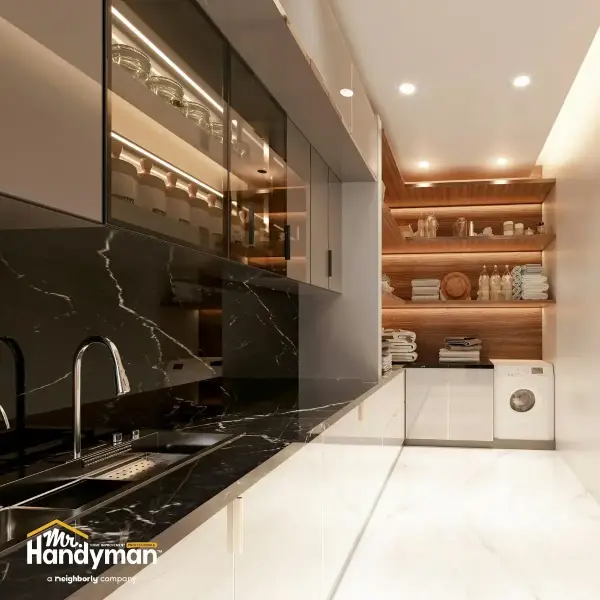
Flooring decisions are among the most consequential material choices in any remodeling project. They affect comfort, maintenance requirements, longevity, and how the entire room feels and functions. In a Lowcountry home, the evaluation criteria need to include moisture performance in a way that elevates it from a secondary consideration to a primary one.
Solid hardwood flooring is appropriate in above-grade spaces with controlled humidity, and it performs beautifully when those conditions are maintained. The caveat is that maintaining controlled humidity in a Lowcountry home requires a functioning HVAC system, consistent temperature management, and attention to the humidity levels that the system is maintaining — not just the temperature. Solid hardwood installed in a room that fluctuates between high summer humidity and the drying effects of heavy air conditioning use will demonstrate that movement through seasonal gapping and slight cupping that, while not catastrophic, is a normal characteristic of the material in this environment. Homeowners who understand this choose solid hardwood with clear expectations. Those who don't are often surprised by movement that was entirely predictable.
Engineered hardwood expands the appropriate application range for wood-look flooring in the Lowcountry. Its cross-ply construction resists the dimensional movement that solid wood undergoes in response to humidity changes, making it suitable for spaces where solid wood would be marginal — first-floor installations over concrete slabs, rooms adjacent to exterior doors, and spaces that see more humidity variation than interior rooms higher in the home. The quality range in engineered hardwood is wide, and the thickness of the wear layer — the solid wood surface that can be refinished over the floor's life — is the most important specification to evaluate when comparing products.
Luxury vinyl plank has earned its position as the most versatile flooring choice for Lowcountry homes, and the reason is straightforward — it is genuinely waterproof, dimensionally stable under humidity fluctuation, and available in quality levels that replicate the appearance of wood and stone convincingly. For below-grade spaces, laundry rooms, bathrooms, mudrooms, and any other space that faces elevated moisture exposure, quality LVP is often the most appropriate choice available. The key word is quality — the performance differences between entry-level and premium LVP products are significant, particularly in wear layer thickness, dimensional stability, and the realism of the visual layer.
Porcelain tile remains the benchmark for wet areas and spaces that require maximum durability. In bathrooms, kitchens, mudrooms, and laundry rooms throughout Charleston and Summerville homes, properly installed porcelain tile with appropriate grout and waterproofing performs reliably for decades. The installation quality matters enormously — tile set over an inadequate substrate, with insufficient adhesive coverage, or without proper waterproofing in wet areas will fail regardless of the tile quality. Specifying installation that includes a waterproof membrane in wet areas is not an upsell — it's the correct approach for the application.
Exterior Materials That Hold Up in the Lowcountry

Exterior material selection is where the regional climate exerts its most direct influence on performance, and where the gap between appropriate and inappropriate choices is most consequential. Exterior materials face the full combination of humidity, UV, rain, occasional wind-driven moisture, and biological growth pressure that the Lowcountry delivers year-round.
Fiber cement siding has become the dominant exterior cladding choice in new construction throughout the Charleston and Summerville area, and its prevalence reflects its genuine suitability for the environment. It resists moisture absorption, does not support the rot and insect damage that wood siding is vulnerable to in this climate, holds paint well, and withstands the temperature cycling and UV exposure of the region without the degradation that affects less robust materials. Factory-primed fiber cement with a quality exterior paint system applied in appropriate conditions provides a durable envelope that requires maintenance on a reasonable cycle rather than the more frequent attention that wood siding demands here.
Wood siding remains present throughout historic Charleston neighborhoods and many older homes in Summerville, and it remains a viable choice for homeowners committed to its appearance and character. The requirement is a maintenance commitment that matches the climate — more frequent paint inspection and touch-up, prompt attention to any areas where the finish has failed, and caulking inspection and replacement at the frequency that the regional climate demands rather than the longer cycles that might be appropriate elsewhere. Wood siding that is well maintained in this climate performs and looks excellent. Wood siding that falls behind on maintenance deteriorates faster here than it would in a less demanding environment.
Composite decking has largely replaced pressure-treated wood decking as the preferred choice for new deck construction throughout the region, and the reasons are practical. Quality composite decking products resist the moisture absorption, rot, and biological growth that makes wood decking in the Lowcountry a maintenance-intensive choice. They don't require the periodic staining or sealing that wood decking needs to maintain its appearance and resist degradation. And the quality of composite products has improved substantially — early composite decking had surface performance issues that current products have largely addressed. Specifying a product with a solid warranty from a manufacturer with a track record in humid coastal environments is the key evaluation criterion.
Matching Materials to the Rooms That Demand the Most
Inside a Lowcountry home, the rooms that see the most moisture — bathrooms, kitchens, laundry rooms, and mudrooms — are where interior material choices have the most direct impact on longevity. These spaces face daily humidity, steam, and surface moisture that expose any material weakness quickly.
Bathroom wall substrates are among the most consequential decisions in a wet-area remodel. Standard drywall, even moisture-resistant versions, is not appropriate behind tile in shower surrounds or tub enclosures. Cement board or foam backer over a waterproof membrane is the correct specification. When this is done wrong, water moves behind the tile surface silently for months before soft walls and loose tile reveal the damage that has accumulated.
Cabinet box construction is another detail that separates remodels that hold up from those that don't. Plywood box construction handles humidity fluctuation and minor moisture exposure without degrading. Particleboard box construction — common in builder-grade cabinet lines — absorbs moisture at cut edges, swells, and loses structural integrity over time. For a kitchen or bathroom remodel intended to last in this climate, plywood box specification is not an upgrade — it's the baseline.
Trim material selection deserves the same attention. MDF trim paints beautifully and performs well in controlled interior spaces. In bathrooms, laundry rooms, and mudrooms where humidity is consistently elevated, MDF absorbs moisture, swells at cut ends, and loses its finish prematurely. Solid wood or cellular PVC trim in those specific locations provides the same appearance with substantially better performance in the conditions those rooms actually experience.
Hardware and Fixtures That Hold Up in the Lowcountry
.webp)
Hardware and fixture finishes are often treated as purely aesthetic decisions, but in a coastal humid climate the quality of those finishes determines how long the product looks and functions as intended. Finish quality varies significantly even within similar price ranges, and the differences become apparent within a few years of installation in high-moisture environments.
Plumbing fixtures with lifetime finish warranties from established manufacturers are backed by testing that supports the claim. Lower-priced fixtures with similar appearances often use finish processes that dull, spot, and degrade within a few years of daily moisture exposure — producing the worn appearance that makes a bathroom feel dated well before its functional life is complete.
For hardware near coastal areas, corrosion resistance moves from a preference to a requirement. Marine-grade or coastal-rated hardware uses materials and finish processes designed specifically for salt-air environments. Standard interior hardware in the same location corrodes at its finish and fasteners faster than its age would suggest, and that corrosion affects both appearance and function over time.
Grout selection is a finishing detail that carries more performance significance than most homeowners realize. Traditional cement-based grout is porous and requires consistent sealing to resist staining and biological growth in this climate. Epoxy grout eliminates that porosity entirely — it requires no sealing and resists the moisture and growth that the Lowcountry environment promotes reliably. The installation is more demanding and carries a higher cost, but in wet areas and high-traffic tile installations it is the specification that performs best over the long term.
FAQs About Choosing Remodeling Materials in Charleston and Summerville
How much more should I expect to spend on climate-appropriate materials? The premium varies by category and is often smaller than expected when the full lifecycle is considered. In many cases, the more appropriate material — LVP over solid hardwood in moisture-prone spaces, fiber cement over wood siding — is comparable in cost when maintenance requirements are factored in. The upfront premium, where it exists, consistently costs less than the replacement and repair cycles that result from using materials poorly suited to these conditions.
Is it worth paying more for name-brand materials versus store-brand alternatives? In categories where performance specifications are transparent and verifiable, store-brand alternatives can represent genuine value. In categories where critical characteristics like finish durability, moisture resistance, and wear layer thickness are harder to verify independently, established brand reputation and warranty terms provide meaningful assurance that generic product descriptions don't.
How do I know if a material is appropriate for coastal conditions specifically? Look for products that carry specific ratings for coastal or high-humidity environments. For hardware and metal components, marine-grade or coastal ratings indicate corrosion resistance appropriate for salt-air exposure. When specific ratings aren't available, a professional with direct experience in local installations provides the most reliable guidance available.
What is the most common material selection mistake in Lowcountry remodels? Choosing materials based on showroom appearance without accounting for how they perform in high humidity and moisture exposure. The most consistent version of this mistake involves standard drywall in wet areas, particleboard cabinet boxes in kitchens and bathrooms, and untreated wood in exterior applications — all of which look appropriate at purchase and begin showing their unsuitability within a few years of installation here.
Should durability or aesthetics lead when the two conflict? In most situations this is a false choice — appropriate options exist within most durability ranges that also satisfy the aesthetic goals of the project. When a genuine tradeoff exists, high-traffic and high-moisture spaces should let durability lead. In more controlled interior spaces where aesthetics are central to the project's intent, more balance between the two criteria is reasonable.
Make the Right Material Choices With Mr. Handyman of Charleston and Summerville
The difference between a remodel that holds up for years and one that requires early repairs almost always traces back to material selection and installation quality. In the Lowcountry, getting those choices right requires local knowledge that goes beyond product specifications alone.
Mr. Handyman of Charleston and Summerville brings regional expertise to every project. Our technicians understand how this climate affects material performance, which products have proven themselves in local installations, and how to execute the work in ways that make those selections perform as they should.
Mr. Handyman of Charleston and Summerville
Reach out today to discuss your remodeling project. The right materials, selected with informed guidance and installed correctly, are what make a remodel a lasting investment.
