.webp)
Gym mirrors serve purposes far beyond simple vanity—they're essential training tools that allow athletes to monitor form, correct technique, prevent injuries through proper biomechanics, and maintain motivation during challenging workouts. But these large, heavy glass panels mounted on walls throughout weight rooms and fitness studios also represent significant safety hazards when improperly installed. A poorly secured mirror might hang without incident for months or even years before vibration from dropped weights, building settlement, or simple adhesive failure causes catastrophic detachment. When hundreds of pounds of glass suddenly separate from a wall and shatter across a gym floor filled with people, the resulting injuries can be severe—deep lacerations from glass shards, crushing injuries if the mirror lands on someone, and the psychological trauma that comes from experiencing such a sudden, violent failure in a space that should prioritize safety above all else.
The consequences extend beyond immediate physical injuries. Facility owners face liability lawsuits, insurance claims, potential closure during investigations, and the reputation damage that occurs when members or athletes get hurt from preventable equipment failures. Word spreads quickly through fitness communities—"someone got hurt at that gym when a mirror fell" becomes the defining story that overshadows years of otherwise safe operations. Even when no injuries occur, mirror failures that happen overnight or during closed hours create expensive cleanup, replacement costs, and the uncomfortable questions about what other corners were cut if something as fundamental as mirror installation wasn't done properly. For facility managers in Charleston and Summerville, where humidity affects adhesives, building settlement is common in our sandy soil conditions, and the competitive fitness market means reputation is everything, proper mirror installation isn't a detail to gloss over—it's a fundamental safety requirement that demands professional execution.
The challenge is that improper installation often looks identical to proper installation until failure occurs. Mirrors hung with inadequate adhesive, insufficient mechanical fasteners, or incorrect wall anchors appear perfectly secure for extended periods before environmental factors, accumulated stress, or simple time causes the installation to fail. This delayed failure pattern means facility managers who cut costs during initial installation or who attempt DIY approaches without proper expertise create time bombs that may not detonate for months or years. Understanding why proper installation matters requires examining the forces acting on wall-mounted mirrors, the environmental factors that affect installation longevity, and the specific installation methods that provide genuine security rather than merely adequate appearance.
Understanding the Forces Acting on Wall-Mounted Mirrors
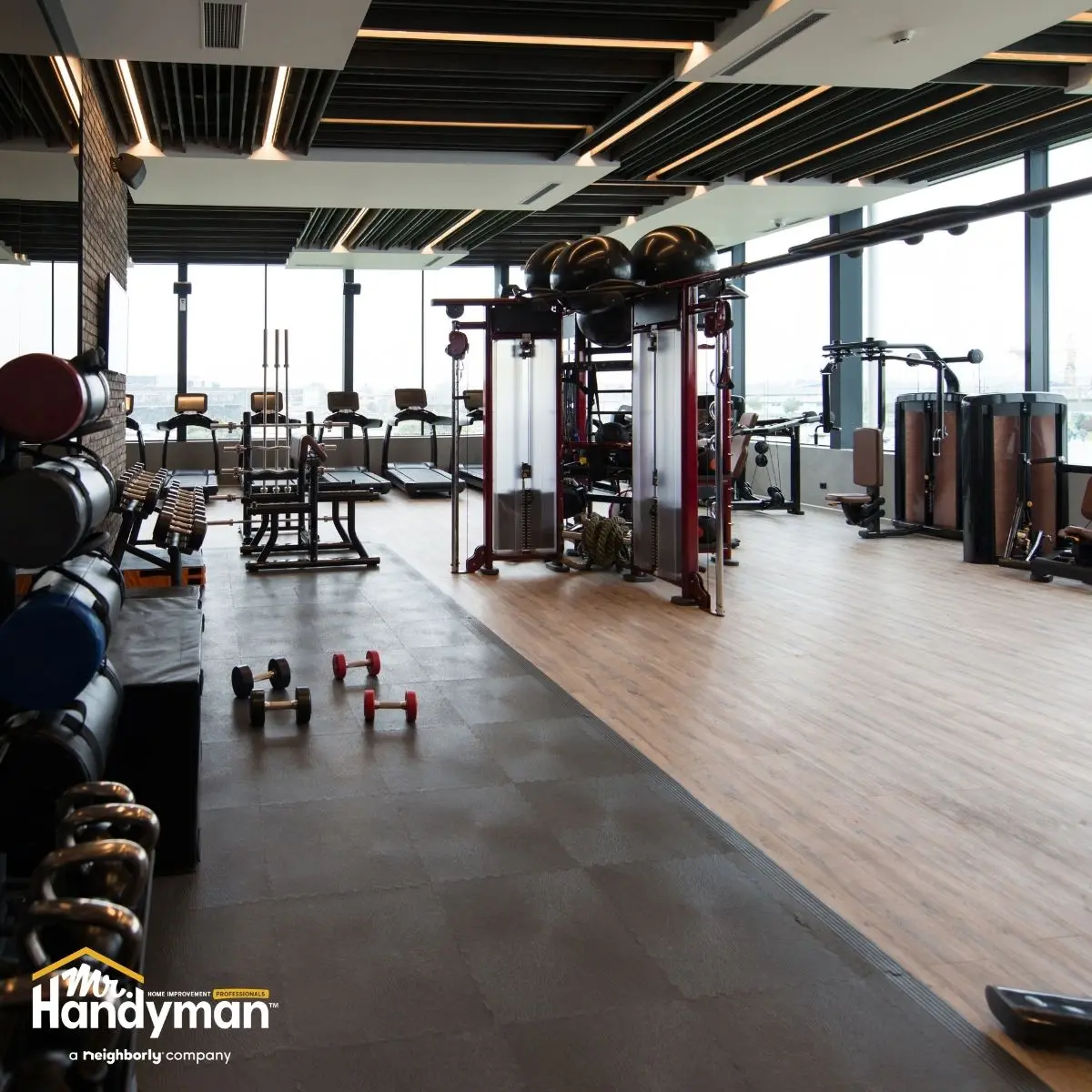
Large gym mirrors face mechanical stresses that residential bathroom mirrors never experience. The constant vibration from dropped weights, impact from equipment being moved or bumped against walls, and the physical stress of athletes leaning against or accidentally contacting mirrors during workouts all create forces that work to separate mirrors from walls. Each individual incident may seem minor—a barbell dropped 20 feet away creates vibration that travels through the floor and into walls, or someone doing wall sits leans their back against the mirror edge—but these forces accumulate over thousands of repetitions, progressively weakening adhesive bonds and stressing mechanical fasteners.
Building movement affects mirror installation more than most facility managers realize. All buildings experience some degree of movement from thermal expansion and contraction, settling on foundations, and structural flexing under load. In Charleston and Summerville, where many commercial buildings sit on sandy soil that shifts with moisture content changes, this movement can be particularly pronounced. Properly installed mirrors accommodate this movement through installation methods that allow slight flex without creating stress concentrations. Improperly installed mirrors resist building movement, creating forces at mounting points that eventually exceed the capacity of adhesives or fasteners, causing failure.
The weight of large mirrors creates constant gravitational stress on mounting systems. A typical 4-foot by 6-foot gym mirror weighs approximately 75 to 100 pounds depending on thickness. An 8-foot by 10-foot mirror can exceed 300 pounds. This weight pulls downward constantly, 24 hours a day, for years. Adhesives must maintain bond strength indefinitely despite this constant stress, temperature cycling, humidity exposure, and the mechanical vibration from facility activities. Mechanical fasteners must remain secure in wall materials that may themselves be degrading from moisture or age. The mounting system doesn't get to rest or recover—it's always carrying full weight.
Environmental factors in Charleston and Summerville create additional challenges that affect installation longevity. High humidity affects adhesive curing and long-term bond strength. Temperature fluctuations cause differential expansion between glass, adhesives, wall materials, and fasteners—each material expands and contracts at different rates, creating stress at interfaces. UV exposure near windows can degrade certain adhesives over time. These environmental stresses compound the mechanical forces, progressively weakening installations that appeared robust initially but deteriorate over months and years of exposure.
Examining Why Adhesive-Only Installation Fails
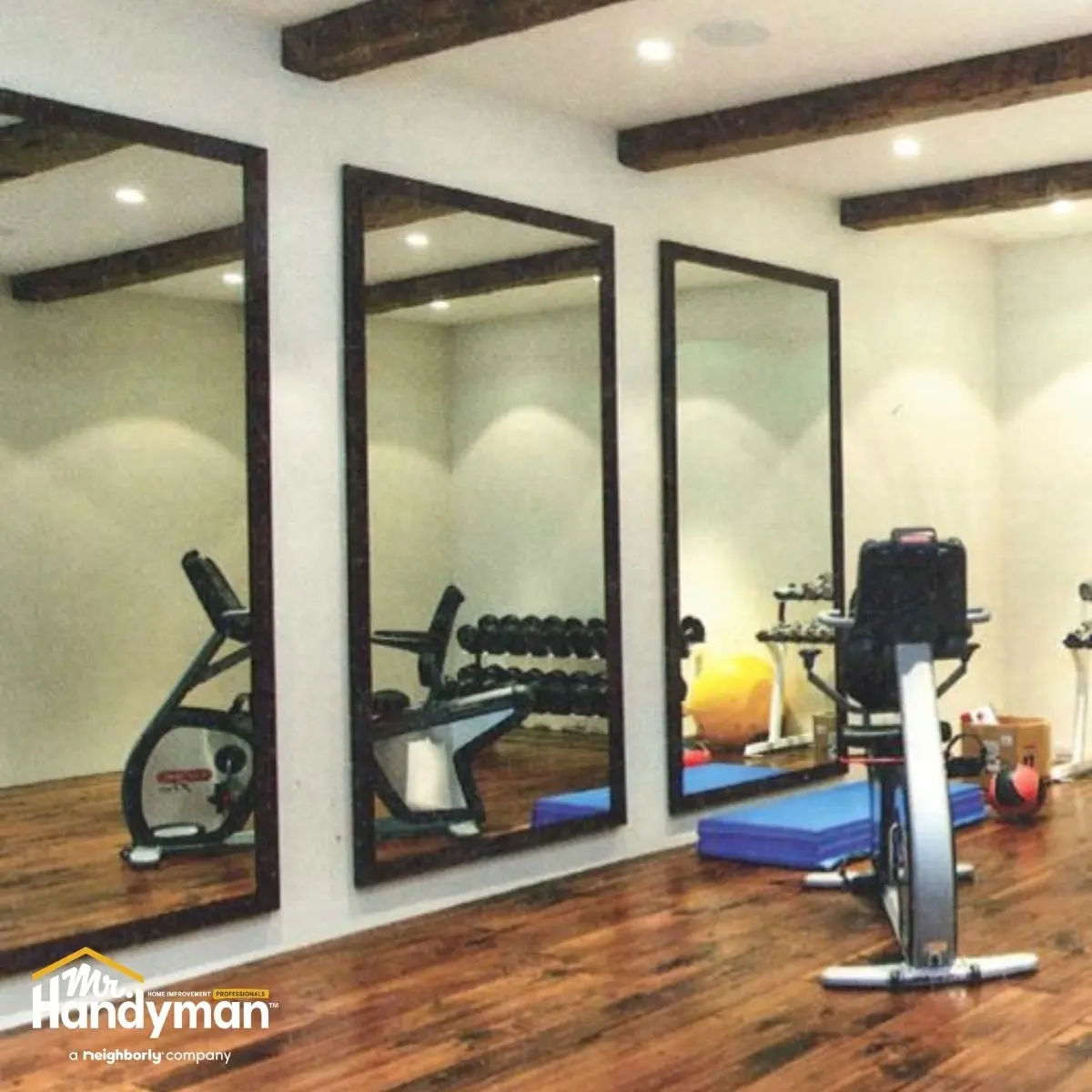
Many gym mirror installations rely primarily or exclusively on construction adhesive or mirror mastic to bond glass to walls. These adhesive-only installations appear secure immediately after installation and may function adequately for extended periods, creating false confidence that the installation is sound. But adhesive-only mounting carries inherent risks that make it inappropriate as the sole securing method for large, heavy mirrors in commercial gym environments.
Adhesive bond strength depends entirely on proper surface preparation that rarely happens in field conditions. The wall surface must be clean, dry, sound, and properly primed for adhesive to achieve maximum bond strength. In real-world installations, walls often have paint, dust, minor surface deterioration, or moisture that compromises adhesive bonds. The installer may clean the surface perfunctorily but not achieve the pristine conditions necessary for adhesives to perform as tested in laboratory conditions. This gap between ideal bond strength and actual field performance creates installations that appear secure but operate with safety margins far smaller than anticipated.
Humidity affects adhesive performance throughout the life of the installation. Many construction adhesives and mirror mastics cure through moisture evaporation or chemical reactions affected by humidity levels. In Charleston and Summerville's humid environment, adhesives may not cure completely, leaving installations that remain somewhat pliable rather than achieving the rigid bond that provides maximum strength. Even after initial curing, ongoing humidity exposure can cause certain adhesives to soften or degrade over time, progressively reducing bond strength in ways that aren't visible until failure occurs.
Vibration from gym activities creates fatigue in adhesive bonds that wouldn't occur in static applications. Each time weights drop, equipment impacts walls, or heavy items get moved across floors, vibration travels through building structures. These vibrations create microscopic movements at the glass-adhesive-wall interface. Over thousands of repetitions, this micro-movement progressively weakens bonds through fatigue mechanisms similar to how metal fails from repeated flexing. The adhesive doesn't suddenly lose strength—it degrades gradually until one vibration event exceeds the remaining bond capacity and the mirror detaches.
Temperature cycling creates stress from differential thermal expansion. Glass, adhesive, drywall, and structural framing all expand and contract at different rates as temperature changes. In facilities with significant day-night temperature variation or those that reduce HVAC during unoccupied hours, this cycling creates repeated stress at adhesive interfaces. Proper installation accounts for this movement, but adhesive-only installations that don't allow for thermal expansion create internal stresses that eventually exceed bond strength, particularly at edges and corners where stress concentrates.
Implementing Proper Mechanical Fastening Systems
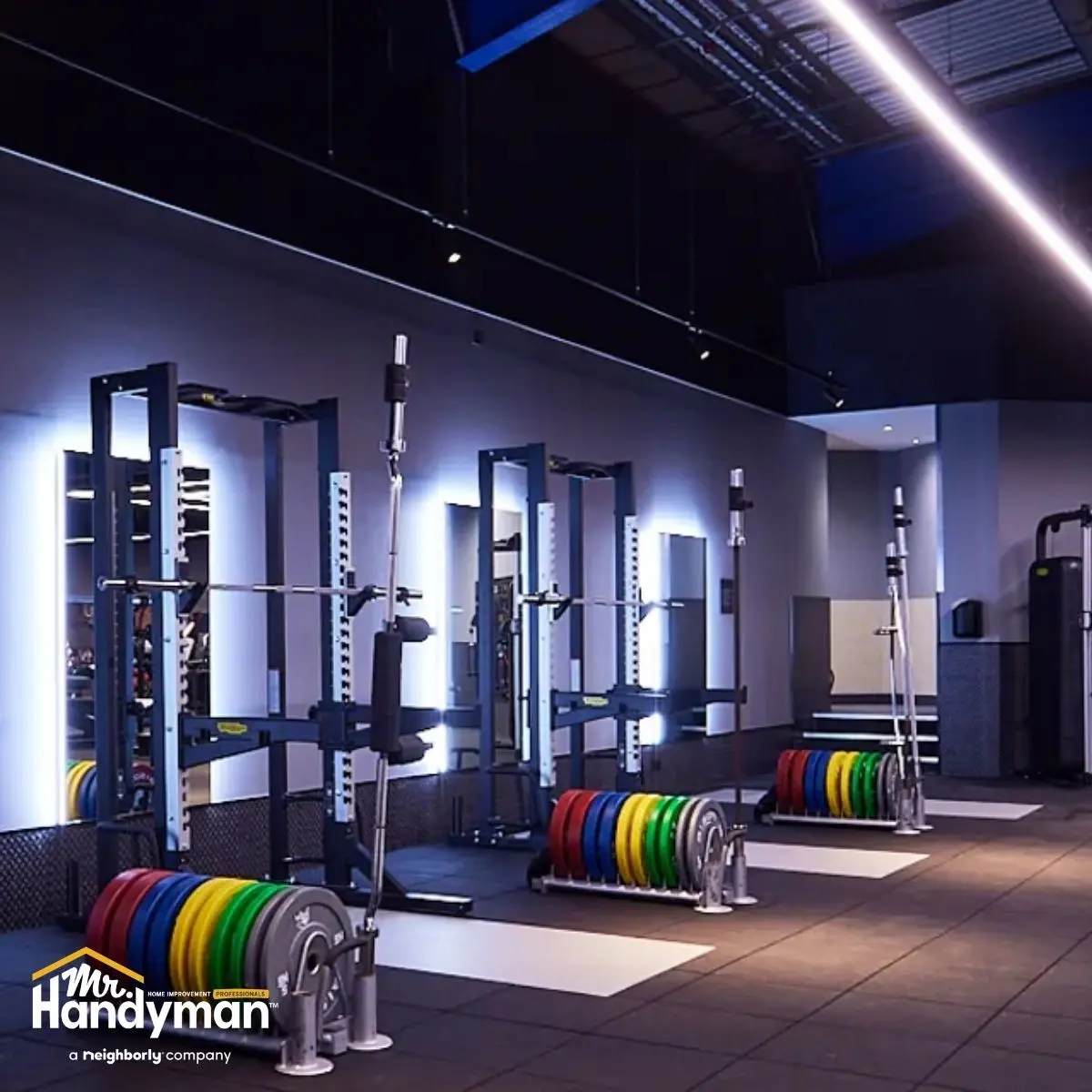
Professional mirror installation in commercial gyms should always include mechanical fastening that provides positive retention independent of adhesive bonds. Mechanical fasteners serve as the primary safety system—even if adhesive completely fails, properly installed mechanical fasteners prevent catastrophic mirror detachment. Several fastening approaches provide this security when executed correctly with appropriate materials and installation techniques.
J-channel or U-channel mounting creates a mechanical cradle that supports mirror weight while allowing proper securing at top and sides. The channel installs level along the bottom edge of where the mirror will hang, providing a shelf that carries the mirror's full weight. The mirror slides into this channel, then gets secured at the top and sides with additional fasteners or channels. This system works exceptionally well because it transfers weight to the bottom channel rather than asking adhesive or top fasteners to carry the entire load indefinitely. The channel must be installed with fasteners into wall studs or solid backing—installing channel only into drywall defeats the purpose because the drywall itself will eventually fail under the constant weight.
Mirror clips provide mechanical retention at multiple points around the mirror perimeter. These specialized clips install with fasteners into solid backing, then secure over mirror edges to prevent the glass from pulling away from the wall. Proper clip installation requires spacing clips appropriately—typically every 12 to 24 inches depending on mirror size and weight—and ensuring each clip fastener penetrates solid backing rather than relying on drywall anchors. The clips must allow slight movement to accommodate thermal expansion while preventing the mirror from separating from the wall if adhesive fails.
Z-clips create interlocking mechanical connections between mirrors and walls. One half of the Z-clip attaches to the wall with screws into solid backing, while the mating half attaches to the mirror back. The two halves interlock when the mirror hangs, creating positive mechanical retention. Z-clips work well for heavy mirrors and provide the advantage of allowing easy mirror removal for replacement if damage occurs. Like all mechanical systems, Z-clips only provide security when fasteners penetrate solid backing—installation into hollow drywall with toggle bolts or anchors creates a system that may work initially but will eventually fail as fasteners work loose from vibration and weight.
Proper backing installation is often necessary before mirror mounting can occur safely. Many gym walls have standard drywall construction with studs on 16-inch or 24-inch centers. This provides inadequate fastening opportunity for large mirrors that need support across their entire width. Professional installation often requires removing drywall sections and installing plywood backing between studs, creating a solid surface that allows fasteners to be placed wherever needed rather than being constrained to stud locations. This backing also distributes weight more evenly and provides the rigid, flat surface necessary for proper mirror installation.
Addressing Charleston and Summerville Installation Challenges
Wall conditions in Charleston and Summerville buildings create specific challenges that affect mirror installation security. Many commercial buildings were constructed on concrete block or poured concrete foundations with wood framing above. The transition between these materials requires special attention during mirror installation because fastening methods differ dramatically between concrete, block, and wood framing. Fasteners must be appropriate for each material and must penetrate to adequate depth—concrete screws or expansion anchors in masonry, wood screws into studs or backing in framed walls.
Moisture in walls affects both adhesive performance and fastener security. Charleston and Summerville's humid climate means wall cavities often contain elevated moisture levels, particularly in buildings without vapor barriers or those with exterior drainage issues that allow moisture infiltration. Adhesives applied to damp surfaces never achieve full bond strength. Fasteners installed in moisture-saturated wood have reduced holding power and are subject to corrosion that further compromises their capacity over time. Pre-installation moisture testing identifies problem areas where additional moisture mitigation is necessary before mirror installation should proceed.
Building age affects structural integrity and the reliability of wall materials for supporting heavy mirrors. Older commercial buildings in Charleston and Summerville may have deteriorated framing lumber, corroded or damaged block, or drywall that's degraded from repeated moisture exposure. Installing heavy mirrors on compromised wall structures creates obvious safety concerns. Professional installation includes evaluating wall condition and reinforcing or repairing structural issues before proceeding with mirror mounting. The cost of this preparatory work is far less than the liability and expense when mirrors fail due to inadequate wall structure.
Coastal proximity in some Charleston locations introduces salt air exposure that accelerates corrosion of metal fasteners. Standard steel fasteners corrode rapidly in these environments, losing holding strength as rust deteriorates the metal. Coastal installations require stainless steel or corrosion-resistant fasteners that maintain integrity despite salt air exposure. Using inappropriate fasteners in coastal gyms creates installations that appear secure initially but deteriorate rapidly as corrosion weakens the very components that provide mechanical retention.
Establishing Inspection and Maintenance Protocols
Even properly installed mirrors require periodic inspection to ensure mounting systems remain secure. Establishing regular inspection protocols catches developing problems before they cause failures. Monthly visual inspection by facility staff should look for any gaps between mirrors and walls, visible movement when mirrors are gently pressed, changes in how mirrors sit in mounting channels, and any signs of adhesive failure like white hazing or separation visible at edges.
Quarterly detailed inspection should include hands-on testing of mirror security. Gently press against different areas of each mirror feeling for any movement or flex that indicates loosening mounting. Check that all mechanical fasteners, clips, or channels remain tight and secure. Examine adhesive lines visible at mirror edges for any signs of separation or deterioration. Document findings with photos and notes that create a record of mirror condition over time, allowing identification of deterioration patterns that might not be obvious from single inspections.
Annual professional inspection by qualified installers provides expert assessment of mirror security and remaining service life. Professional inspectors can identify subtle signs of mounting system degradation, evaluate whether adhesives are maintaining adequate bond strength, and assess whether building movement or settling has created stress in installations. These inspections should include recommendations for preventive maintenance or reinforcement before problems become failures.
Vibration monitoring in facilities with particularly intense weight training or heavy equipment use provides data about the mechanical stress mirror installations experience. Simple vibration sensors placed near mirrors record the intensity and frequency of vibration events. This data informs whether current installations are adequate for actual usage or whether additional securing is necessary. Facilities that expand equipment offerings or increase training intensity may subject existing mirror installations to forces exceeding what original installation was designed to handle—vibration monitoring identifies when this occurs before failures happen.
Understanding Liability and Insurance Implications
Mirror failures that cause injuries create significant liability exposure for facility owners and managers. Courts have consistently held that facility operators owe duty of care to provide safe environments, and failures from improper installation or inadequate maintenance demonstrate breach of this duty. Insurance covers many liability claims, but premiums increase after incidents, and repeated claims or severe injuries can make facilities uninsurable or subject to policy exclusions that leave owners personally liable for future incidents.
Documentation of proper installation and maintenance creates the evidence that demonstrates due diligence if incidents occur. Installation contracts specifying methods and materials used, photographs of installation process showing proper fastening and backing, inspection records documenting regular monitoring, and maintenance logs showing prompt response to identified issues all demonstrate that facility management took reasonable precautions. This documentation doesn't prevent lawsuits if injuries occur, but it provides strong defense against negligence claims by showing the facility met or exceeded industry standards.
Professional installation by licensed contractors provides additional liability protection through the contractors' insurance and warranty coverage. When licensed contractors perform installation, their insurance provides primary coverage if installation failures cause injuries. Their warranties often cover both materials and workmanship, providing recourse if premature failure occurs. DIY installation or use of unlicensed handymen eliminates these protections, leaving facility owners solely liable for any problems that occur.
Code compliance affects both immediate safety and long-term liability. Building codes and commercial construction standards specify requirements for mirror installation in commercial facilities. Installations that don't meet these standards not only create safety risks but also expose facilities to code violations, fines, and potential closure orders if discovered during inspections. When injuries occur from non-compliant installations, this code violation provides clear evidence of negligence that strengthens plaintiff cases and may void insurance coverage if policies exclude claims from code violations.
Frequently Asked Questions
Should gym mirrors be installed with adhesive only or do they need mechanical fasteners? Mirrors in commercial gyms should always include mechanical fastening—channels, clips, or other positive retention systems that prevent mirror detachment even if adhesive fails. Adhesive provides supplementary bonding but should never be the sole securing method for mirrors over 12 square feet or in high-vibration environments.
How thick should gym mirrors be? Commercial gym mirrors are typically 1/4-inch thick for smaller panels and 3/8-inch for larger installations. Thicker glass provides better optical quality, resists flexing that can cause distortion, and is more resistant to breakage from impacts. Thinner mirrors save cost but compromise safety and performance.
Can existing gym mirrors be reinforced if installation is questionable? Yes—professional installers can add mechanical fastening systems to mirrors that were originally installed with adhesive only. This typically involves installing channels or clips that secure mirrors without requiring complete removal and reinstallation. Reinforcement cost is far less than the expense and risk of leaving questionable installations in place.
How often should gym mirrors be professionally inspected? Annual professional inspection is minimum for commercial gym mirrors. High-traffic facilities or those with heavy weight training should consider semi-annual inspection. Any facility that's experienced building settlement, water intrusion, or other structural issues should have mirrors inspected immediately.
What's the typical lifespan of properly installed gym mirrors? The mirrors themselves can last indefinitely if not damaged. Mounting systems typically last 15 to 25 years with proper maintenance. Adhesives may degrade sooner in humid environments, which is why mechanical fastening is critical—it provides security when adhesives eventually weaken.
Mr. Handyman of Charleston and Summerville provides professional mirror installation services for gyms, fitness studios, and athletic facilities throughout the Lowcountry. Our experienced team understands the specific challenges that commercial installations face and uses proper mounting methods that prioritize safety and longevity. We handle everything from single mirror replacement to complete gym mirror systems, ensuring installations meet code requirements and industry best practices. Call or visit https://www.mrhandyman.com/charleston-summerville/ to discuss your mirror installation needs and ensure your facility provides the safe environment that athletes deserve.