
Walk into any gym and your eyes make a complete assessment within the first ten seconds. Before you evaluate equipment quality or class schedules, you're registering wall condition, ceiling integrity, and overall finish quality. These aren't superficial details—they're the visual foundation of your brand promise. When walls show impact damage, water stains, or poor patch jobs, members draw immediate conclusions about how you manage your facility. The connection between wall and ceiling condition and perceived gym quality is direct and unforgiving.
In Charleston and Summerville, where humidity creates ongoing challenges for interior finishes and older buildings settle in ways that produce cracks and separations, maintaining pristine walls and ceilings requires constant attention. The coastal climate doesn't just affect how buildings age—it affects how quickly minor damage becomes major problems. A small crack in drywall becomes a moisture entry point. Water stains on ceiling tiles signal roof leaks or HVAC condensation issues that will worsen. Gym owners who treat these as cosmetic issues rather than urgent repairs discover that deferred maintenance compounds exponentially in humid environments.
The business impact of damaged walls and ceilings extends far beyond aesthetics. First-time visitors making membership decisions form impressions based on facility condition. When they see holes patched with mismatched paint, ceiling tiles stained brown from water damage, or corners where drywall is separating, they question whether you maintain other aspects of the gym with equal neglect. In competitive fitness markets where members have multiple gym options within a few miles, facility condition becomes a tiebreaker. Professional, well-maintained interiors signal that you take your business seriously and respect your members enough to provide a premium environment.
Member retention connects directly to facility pride. When your gym looks tired and damaged, members feel less motivated to show up. The psychological effect is real—people perform better in environments that feel professional and well-maintained. When walls are dinged and marked from equipment impacts, when ceiling tiles sag or show water damage, when corners are cracked and paint is peeling, the cumulative effect diminishes the workout experience. Members begin to tolerate these conditions rather than feel proud of their gym, and tolerance is a precursor to cancellation.
The Most Common Wall and Ceiling Damage in Gyms
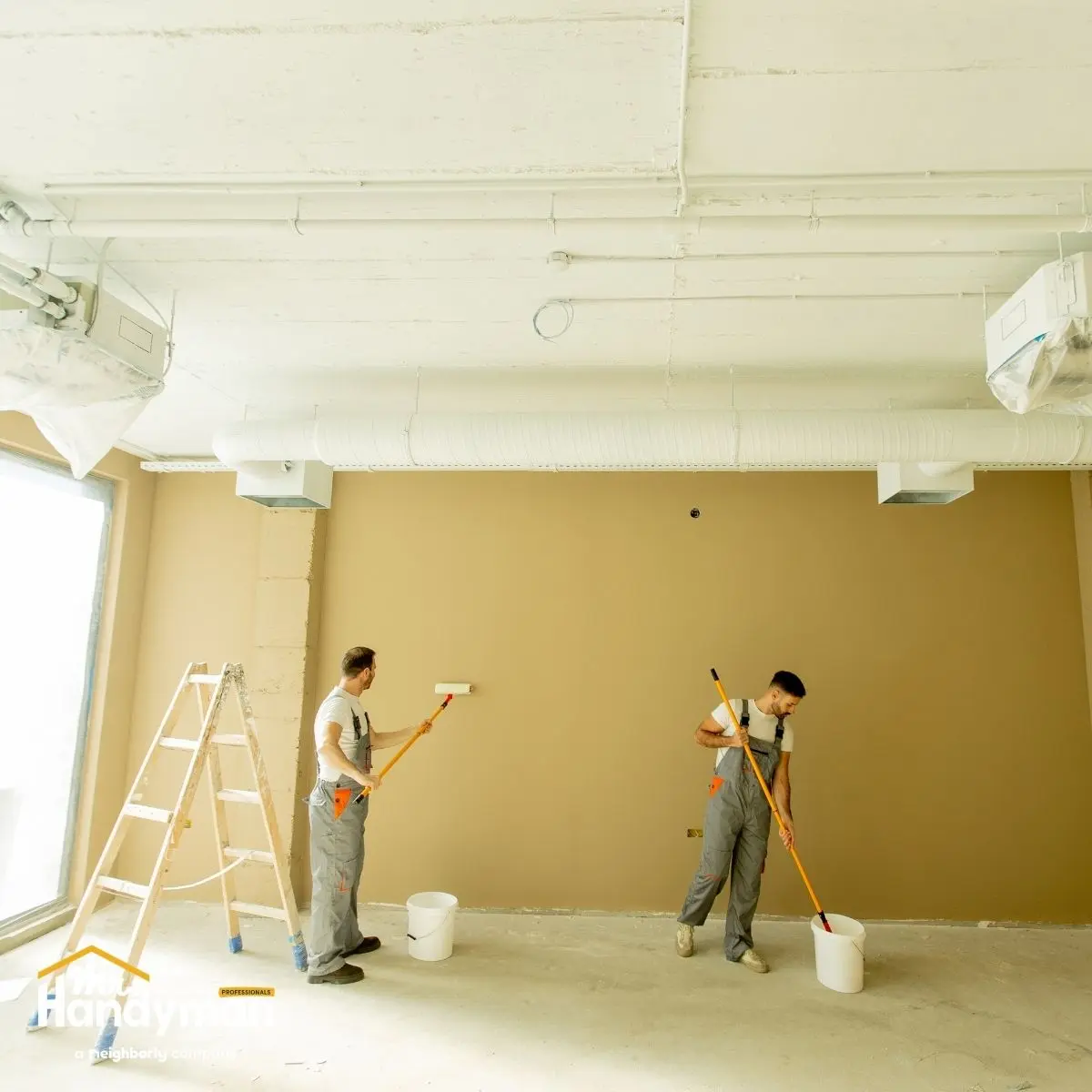
Impact damage from equipment and weights creates the most visible wall problems in gym environments. Free weight areas see the highest concentration of wall damage—barbells making contact during exercises, weight plates bumping walls during equipment moves, and members accidentally striking walls during exercises. Even with proper form coaching, equipment occasionally makes wall contact, and over months and years, this creates a constellation of dents, holes, and surface damage that screams neglect if left unrepaired. The damage often clusters around squat racks, bench press stations, and weight storage areas where equipment density is highest.
Water damage appears as staining, bubbling paint, or soft drywall and indicates active moisture problems that will worsen if not addressed. In gyms, water damage sources include roof leaks, HVAC condensation, plumbing issues, and humidity migration through exterior walls. Charleston and Summerville's coastal climate makes moisture intrusion particularly problematic because humidity levels stay elevated even when it's not raining. Walls and ceilings in poorly ventilated spaces absorb moisture, leading to paint failure, mold growth, and drywall degradation. Water stains don't just look bad—they tell members you have unresolved building problems.
Ceiling tile damage ranges from staining to sagging to complete failure. Drop ceiling systems common in commercial gym spaces are vulnerable to water damage, impact from equipment being moved, and simple age-related degradation. Stained ceiling tiles are immediate red flags because they indicate moisture problems above the ceiling plane—either roof leaks, HVAC condensation, or plumbing issues. Sagging tiles suggest the grid system is failing or tiles have absorbed so much moisture they've lost structural integrity. Missing tiles, often removed temporarily to access utilities and never replaced, create an unfinished appearance that undermines your professional image.
Drywall cracks and separations appear as buildings settle, temperature and humidity cycles cause expansion and contraction, and structural movement occurs. In older Charleston and Summerville buildings, settling is ongoing and produces new cracks regularly. These cracks typically appear at weak points—corners where walls meet ceilings, around door and window frames, and at seams between drywall sheets. Small cracks are cosmetic initially but become moisture entry points in humid climates. As moisture penetrates, cracks widen, paint peels, and what started as a hairline crack becomes a structural repair.
Paint failure manifests as peeling, bubbling, chalking, or discoloration and usually indicates either moisture problems or incorrect paint selection for the environment. Gyms are harsh environments for paint—high humidity from showers and member perspiration, frequent cleaning with chemicals, and constant contact from equipment and members all stress paint finishes. When paint fails, it doesn't fail uniformly—you get patchy areas where the coating has degraded while other areas remain intact, creating a blotchy appearance that looks unprofessional. In humid coastal environments, paint must be specifically formulated for moisture resistance or failure is inevitable.
Corner bead damage occurs where walls meet at outside corners and shows as dents, cracks, or exposed metal from impact. Outside corners in gyms take tremendous abuse from equipment moves, cleaning equipment impacts, and occasional member contact. The metal or plastic corner bead that protects drywall edges can only withstand so much impact before it dents or separates. Once corner bead is compromised, the drywall behind it is vulnerable to progressive damage. These corner impacts are particularly visible because they catch light differently than flat wall surfaces, making even small damage highly noticeable.
Why Members Notice Wall and Ceiling Damage More Than You Think

First impressions form within seconds and directly influence membership sales. Prospective members touring your facility are actively looking for reasons to choose your gym or disqualify it. They're comparing your facility to competitors they've visited or belong to currently. Wall and ceiling damage registers immediately as a negative data point. Even if everything else about your gym is excellent—equipment, classes, staff—visible facility damage creates doubt. The cognitive shortcut people make is simple: if they don't maintain their walls, what else are they neglecting?
Social media amplifies facility condition issues because members photograph themselves working out and post those images where hundreds or thousands of people see them. When your walls show damage in the background of member selfies and workout videos, that damage becomes part of your brand image whether you like it or not. Members might not consciously notice wall damage while working out, but when they review photos before posting, suddenly that water-stained ceiling tile or hole-riddled wall becomes very visible. Your facility condition is no longer just observed by people inside your building—it's broadcast to everyone in your members' social networks.
Premium pricing requires premium presentation. Gyms charging $50-100+ per month for memberships cannot maintain bargain-basement facility conditions without creating cognitive dissonance. Members paying premium prices expect premium environments. When they see damage that clearly hasn't been repaired for months, they question whether their membership fees are being reinvested in the facility. This questioning leads to price sensitivity and makes members more likely to drop service or switch to cheaper competitors at the first opportunity. Your prices must be justified by your facility presentation.
Cleanliness perceptions are influenced by overall condition, not just actual cleaning. A gym can be thoroughly cleaned daily, but if walls are damaged and ceilings are stained, members will perceive the facility as dirty. The psychological connection between damage and cleanliness is so strong that visible repairs can actually improve cleanliness scores in member surveys even when cleaning protocols haven't changed. This is because damage creates visual clutter and imperfection that the brain associates with lack of care. Pristine walls and ceilings amplify the impact of your cleaning efforts.
Competitor comparisons happen constantly in members' minds. When members visit other gyms—for travel, temporary membership changes, or guest passes—they compare facility conditions. If a competitor's walls and ceilings are in better condition than yours, that observation sits in their memory as evidence that perhaps they should switch gyms. In Charleston and Summerville, where multiple gyms often serve the same geographic area, members can easily visit competitors during free trial periods. If your facility condition trails competitors significantly, you're vulnerable to member loss regardless of other factors like equipment or class quality.
What Ceiling Damage Reveals About Bigger Problems

Ceiling water stains indicate active or past moisture intrusion that requires source identification before cosmetic repair. That brown or yellow stain on a ceiling tile or drywall ceiling didn't appear randomly—water came from somewhere above. In single-story buildings, the source is usually roof leaks, HVAC condensation, or plumbing. In multi-story buildings, add the possibility of leaks from the floor above. Covering ceiling stains without identifying and fixing the source guarantees the staining will return, often worse than before. Professional repair includes moisture source investigation, not just stain coverage.
Sagging ceiling tiles or drywall suggest structural issues or accumulated moisture weight. Ceiling systems are designed to be lightweight and are supported by relatively light-duty framing. When ceiling planes sag, something has added weight—usually water absorption—or the support structure has failed. Sagging ceiling tiles often indicate that moisture has made them so heavy they're pulling away from the grid system. Sagging drywall ceilings suggest either water accumulation in the drywall itself or failure of the framing supporting the drywall. Neither condition resolves itself, and both worsen until properly repaired.
Mold growth on ceilings appears as black, green, or brown spotting and indicates ongoing moisture problems and potential air quality issues. Mold doesn't grow on dry surfaces—it requires moisture and organic material. Drywall provides the organic material, and moisture intrusion provides the water. Mold on ceilings is particularly concerning in gyms because members are breathing heavily during exercise, and mold spores can trigger respiratory issues. Beyond the health implications, visible mold is reputational poison—members will leave and warn others about mold problems at your facility. Mold remediation requires addressing moisture sources and affected material removal, not surface cleaning.
HVAC condensation stains appear as linear staining or dripping patterns following ductwork routes and indicate insulation or humidity control problems. Air conditioning ducts carry cold air through spaces where temperatures are higher, creating conditions for condensation on duct exteriors if insulation is inadequate. In Charleston and Summerville's humid climate, this condensation can be substantial. Staining along ductwork patterns tells you that cold ducts are sweating and dripping condensation onto ceiling materials. The fix requires improving duct insulation and potentially adjusting HVAC humidity control, not just replacing stained ceiling tiles.
Acoustic ceiling tile degradation appears as tiles that have lost their acoustic properties, are crumbling, or are discolored beyond just staining. Acoustic ceiling tiles have finite lifespans, particularly in humid environments where moisture accelerates material breakdown. Tiles that were once sound-absorbing become less effective as they age and absorb moisture. In gym environments where sound control matters—background music, group fitness classes, conversation in common areas—degraded acoustic tiles mean sound management is suffering. Replacing failed acoustic tiles not only improves appearance but restores the sound environment you need for member comfort.
Frequently Asked Questions
How quickly should visible wall and ceiling damage be repaired in member-facing areas?
Damage in high-visibility areas like entrances, front desk, and main workout floors should be repaired within a week of identification. These are the spaces forming first impressions for prospective members and being observed daily by current members. Minor damage like small dents might wait until you can batch several repairs together, but anything obvious—holes, water stains, missing ceiling tiles—needs rapid attention. Back-of-house areas have more flexibility, but even storage and mechanical rooms should be maintained because staff work there and deserve professional environments.
Can water-stained ceiling tiles be cleaned or do they require replacement?
Water stains on ceiling tiles cannot be effectively cleaned—the staining has penetrated the tile material. Even if surface cleaning lightens the appearance temporarily, the staining remains visible and often returns as atmospheric moisture continues interacting with the compromised tile. Ceiling tiles are relatively inexpensive, making replacement the only professional solution. Before replacing stained tiles, identify and eliminate the moisture source or new tiles will stain identically. Keep extra ceiling tiles from your original installation stored on-site for quick replacement when damage occurs.
What's the best way to protect gym walls from equipment damage without looking institutional?
Targeted protection in high-impact zones works better than wall-to-wall protective panels. Install impact-resistant panels or padding only where equipment actually contacts walls—behind squat racks, along weight storage walls, and on corners in traffic paths. These can be specified in colors matching your branding rather than institutional gray. For walls that need full protection, FRP panels come in various finishes and can be visually appealing while providing durability. Strategic placement means protection appears intentional rather than reactive.
How does Charleston and Summerville's coastal humidity specifically affect gym walls and ceilings?
Coastal humidity accelerates paint failure, promotes mold growth, and causes drywall to absorb moisture and lose structural integrity faster than dry climates. Standard paint systems fail within 2-3 years in humid gyms versus 5-7 years in dry climates. Mold growth on ceiling tiles and wall surfaces occurs much more readily when humidity stays elevated. Metal components like corner beads and ceiling grid systems corrode faster. All repair work must use moisture-resistant materials or expect premature failure. Dehumidification becomes necessary, not optional, particularly in locker rooms and poorly ventilated spaces.
Should damaged drywall be patched or replaced entirely?
This depends on damage extent and type. Small impact holes and cracks can be professionally patched to be invisible after paint. Water-damaged drywall should be replaced because moisture has compromised the paper facing and gypsum core—patches over water-damaged substrate will fail. When damage is extensive across a wall, complete drywall replacement often costs similar to extensive patching while providing better results. If you're frequently patching the same walls, replacement with impact-resistant materials makes more financial sense than perpetual repairs.
What's a reasonable annual budget for wall and ceiling maintenance in a commercial gym?
This varies by facility size and age, but plan for $2,000-5,000 annually for a 5,000-10,000 square foot gym. This covers regular touch-up painting, minor drywall repairs, ceiling tile replacement, and preventive work. Newer facilities with good initial construction need less. Older buildings or facilities with inadequate protective measures need more. Deferred maintenance costs more when multiple repairs are needed simultaneously. Setting aside monthly maintenance budget prevents being surprised by accumulated repairs and allows you to address issues before they impact member perception.
Professional Wall and Ceiling Repair Services in Charleston and Summerville
Your gym's walls and ceilings form the backdrop for every member's workout experience. Maintaining these surfaces in pristine condition isn't just about appearance—it's about demonstrating the professionalism and attention to detail that justifies your membership pricing and keeps members loyal. From impact damage repairs to moisture problem resolution, professional repairs ensure your facility presents the image your brand deserves.
Mr. Handyman of Charleston and Summerville provides comprehensive wall and ceiling repair services for commercial gyms and fitness facilities. Our technicians understand the unique challenges gyms face—from equipment impact damage to humidity-related problems common in coastal environments. We can assess damage, recommend appropriate materials for high-stress gym environments, and complete repairs during your low-traffic hours to minimize member disruption.
Call us or visit https://www.mrhandyman.com/charleston-summerville/ to schedule a facility assessment and discuss wall and ceiling repairs that will restore your gym's professional appearance.
